Safe Outdoor Areas
Eliminating overhead hang-ups and unstable limbs makes your yard safe for family, pets, and visitors.
Comprehensive cleanup, hung branch removal, and storm recovery for East Point properties.
Restoring storm-affected properties across East Point and Fannie Bay.
Our storm damage tree removal East Point service covers complete property cleanup following severe wet season squalls, monsoons, and cyclones.
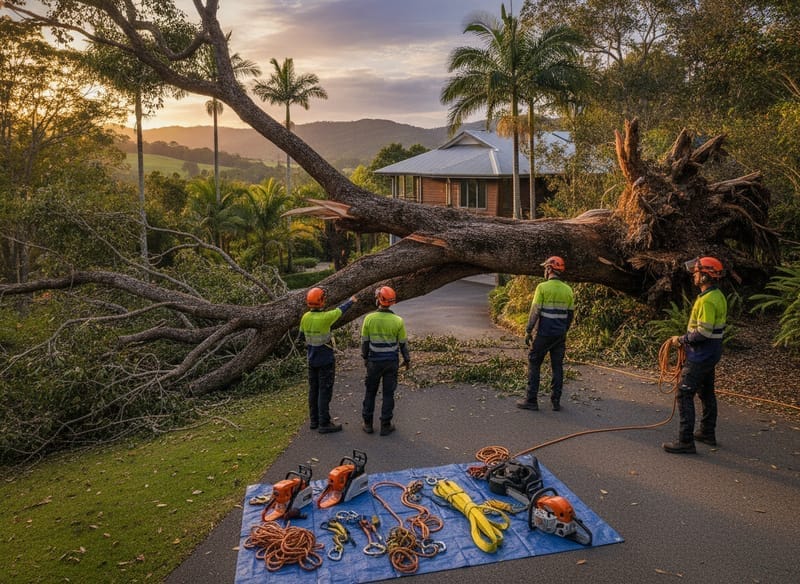
During Darwin's wet season, sudden monsoon squalls bring high winds to East Point's coastline. When trees like African Mahogany or brittle figs snap under wind loads, they often leave massive hung branches that remain dangerous long after the storm has passed.
Eliminating overhead hang-ups and unstable limbs makes your yard safe for family, pets, and visitors.
Clearing storm debris quickly prevents mould buildup, pest harborage, and damage to turf and gardens.
Professional remedial pruning gives storm-damaged native trees the best chance of forming sound new canopies.
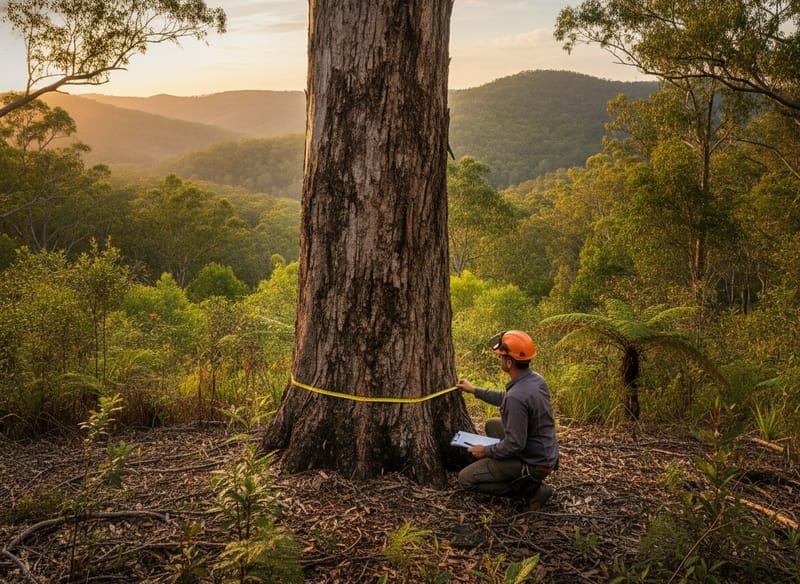
We walk the property to identify all fallen timber, split crotches, and suspended canopy hazards.
We prioritize critical hazards, plan machinery access, and provide an all-inclusive cleanup quote.
Our team removes dangerous branches and performs remedial cuts to damaged trees.
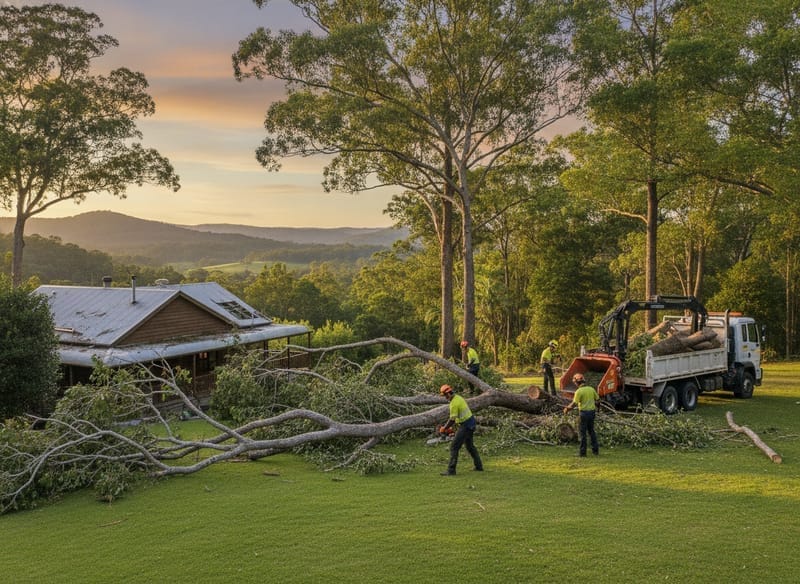
All fallen debris is chipped on-site, logs are handled, and the entire property is cleared.
When severe weather strikes the Top End, finding fast and professional Storm Damage Tree Removal East Point properties can rely on is critical. Our monsoonal climate brings intense wet seasons, and recent extreme events like Cyclone Fina have proven exactly what high-velocity winds can do to urban canopies. Our team of qualified arborists understands the distinct challenges of working in East Point and the wider Darwin region. We live and operate here, meaning our trucks and climbers are ready to respond when squalls and cyclones leave your yard in chaos. Saturated lateritic soils combined with cyclonic gusts create the perfect recipe for catastrophic root plate failures, bringing massive canopies down onto roofs, fences, and driveways. When a tree fails under storm conditions, it becomes an unpredictable hazard. We bring the heavy equipment, the precise rigging skills, and the local knowledge required to dismantle dangerous timber safely. Whether you are dealing with a snapped branch hanging over your driveway or a completely uprooted African Mahogany threatening your home, our focus is on rapid, safe, and decisive action to secure your property.
A storm-damaged tree is not just a pile of firewood waiting to be cut; it is a highly complex structural hazard loaded with unpredictable tension and compression forces. When homeowners or under-qualified operators attempt their own cleanup, the results can be disastrous.
Cutting a fallen or hung-up tree without understanding these forces often leads to the trunk violently snapping back, rolling, or dropping suddenly. Trees like the Darwin Stringybark or heavy introduced species like African Mahogany weigh several tonnes. If a canopy is leaning on a structure, the wrong cut can instantly shift that weight directly onto the roof or the person holding the chainsaw. Furthermore, using ladders with chainsaws in wet, post-storm conditions is incredibly dangerous.
Our team approaches every compromised tree with rigorous safety protocols. If a tree has sustained heavy canopy damage but the root plate remains intact, we assess it against the AS4373 Pruning of Amenity Trees standard. Sometimes, targeted pruning—such as crown reduction or removing torn branches via a proper branch collar cut—can save a resilient local species like a Sea Almond or Banyan. However, we strictly avoid lopping or heading back, as this promotes weak epicormic regrowth that will simply snap and become a worse hazard during the next wet season.
Handling storm-damaged timber requires specialized techniques. We deploy advanced arboricultural equipment to safely process hazards on East Point properties, tailoring our approach to the site constraints and the specific tree failure.
We first secure the site by focusing on trees threatening structures, powerlines, or critical access points. Our arborists tag hazards and perform make-safe cuts to relieve structural tension, stabilizing hung-up branches before full dismantling begins.
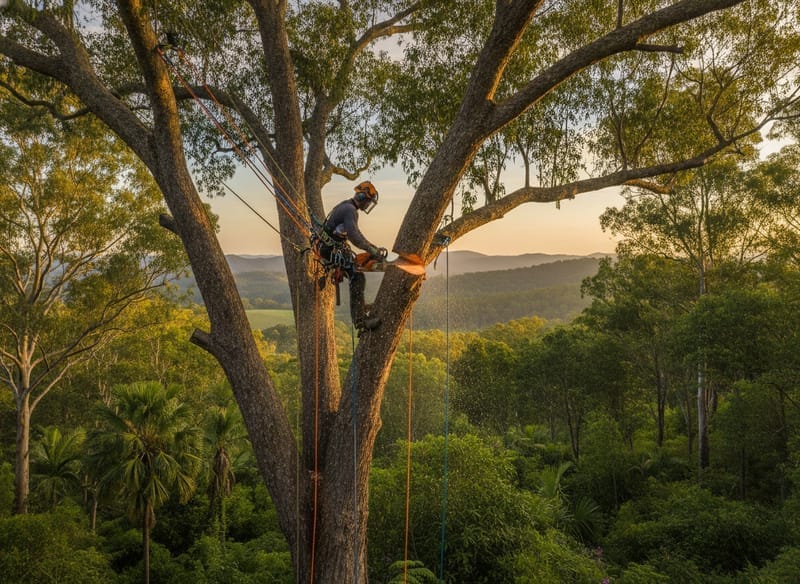
For tight East Point blocks where elevating work platforms (EWPs) cannot safely reach, our AQF Level 3 climbers utilize advanced double-rope techniques and friction devices to lower heavy timber piece by piece, preventing impact damage to the property below.
When a massive tree has uprooted and rests on a house, climbing it is too dangerous. We coordinate heavy crane lifts, allowing our arborists to cut strategic sections that are safely hoisted up and swung away from the compromised structure.
Uprooted trees often leave massive, heavy root plates standing vertically. As we cut the trunk away, this plate can violently snap back into the hole. We carefully strap and manage the stump load, followed by professional stump grinding through Darwin's hard lateritic soil profile.
When a major weather event hits Darwin, our priority is securing the most dangerous hazards first. We have refined our emergency response to be as efficient, safe, and communicative as possible. Step 1: Rapid Triage and Assessment We conduct an initial property walk-through to categorize the damage. Immediate hazards over homes or access points are marked for priority action, while ground-level cleanup of fallen debris is scheduled accordingly. Step 2: Transparent Quoting and Insurance Support We provide a detailed, itemised quote mapping out exactly what needs doing per tree. We capture comprehensive pre-work photos and structure our documentation specifically for insurance claims, making your lodgement process as smooth as possible. Step 3: Make-Safe Operations Our crews arrive with advanced climbing gear, top-handle saws, and EWPs. We remove the primary threats, cutting away suspended branches and relieving structural tension from fallen and twisted trunks. Step 4: Full Dismantling and Debris Processing Once the site is rendered safe, we dismantle the remaining timber. Using high-capacity wood chippers, we process the limbs into mulch on-site. Heavy logs are systematically loaded onto our tipper trucks using loader cranes. Step 5: Final Cleanup We rake and sweep the site, transporting the debris to appropriate green waste facilities. We leave your East Point property safe, clear, and ready for further repairs if needed.
Storm cleanup is high-risk work, and our safety framework is uncompromising. Our climbing arborists hold AQF Level 3 in Arboriculture, while our consulting arborists hold AQF Level 5, allowing us to provide the formal reports your insurer may require.
Our team is fully public liability insured and covered by WorkCover, protecting your East Point property during heavy-duty emergency operations. Every job is executed in strict alignment with AS4373 Pruning of Amenity Trees and AS4970 Protection of Trees on Development Sites.
We hold all necessary high-risk work tickets, including EWP operations, working at heights, and specialized chainsaw felling units, ensuring our crew meets the strictest occupational health and safety standards in the Territory.
Working in the Top End means understanding the unique environmental factors that cause tree failure. Cyclone Fina (Category 3, Nov 2025) and Cyclone Marcus before it clearly demonstrated why certain trees fail here. East Point properties are highly exposed to coastal winds, and the local soil structure plays a massive role in tree stability. Darwin sits on gravelly red soil with a lateritic hardpan that restricts deep root growth. When the wet season hits and the ground saturates, these shallow root plates lose their grip. Fast-growing, top-heavy species like the African Mahogany are notorious for uprooting entirely under these cyclonic conditions. Fortunately, getting a hazardous tree cleared quickly is straightforward here. The City of Darwin does not have a private land tree permit or significant tree register for standard residential blocks. Under By-law 103, you are actually obliged to keep vegetation clear of verges and paths. This means you do not need to wait for council red tape to commission Storm Damage Tree Removal East Point services on your residential block.
Once the immediate hazards are cleared, the surviving trees on your property require close attention. High winds can cause invisible structural damage, twisting trunks and weakening limb unions that may not actually fail until the next heavy squall. We highly recommend booking an assessment for any mature trees that endured the storm but remain standing. Look for tell-tale signs of root failure, such as soil heaving, cracking at the base, or a sudden, slight lean. If you notice any of these, call our arborists. Regular deadwooding and target pruning during the dry season is your best defence before the wet season returns.
Storm damage cleanup costs are determined by the volume of debris, the height of hung-up limbs, and site accessibility.
We provide honest, upfront quotes with transparent pricing on all storm cleanups.
We provide post-storm tree services throughout East Point and across Darwin.
Contact our experienced arborists for comprehensive post-storm tree recovery.
Get a Free Quote