Hassle-Free Insurance Processing
Clear, itemised paperwork helps you navigate insurance claims for storm damage quickly and smoothly.
Comprehensive post-storm cleanup, limb removal, and multi-tree clearing across Jingili following severe weather.
Post-cyclone and storm recovery across Jingili, Rapid Creek, and Millner.
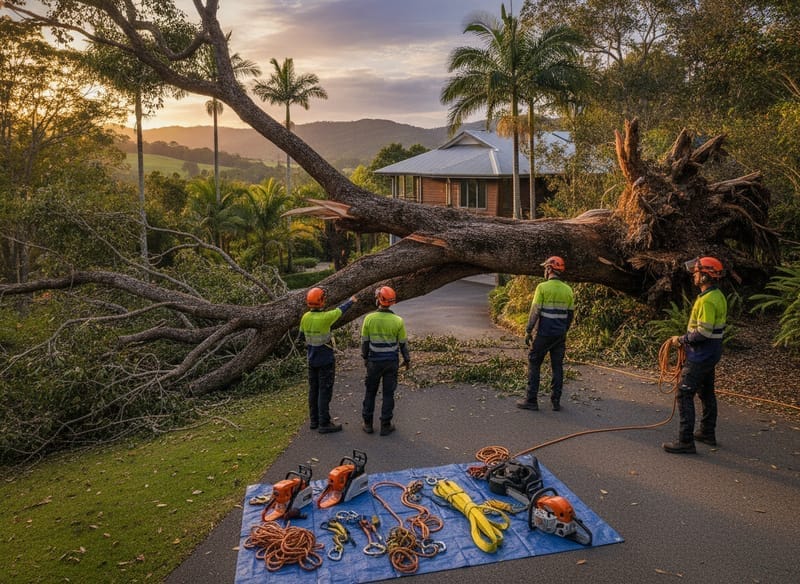
When tropical storms or cyclones leave a trail of broken branches and uprooted trees, our storm damage tree removal in Jingili provides full-scale cleanup and restoration.
Severe events like Cyclone Fina and seasonal tropical squalls leave lasting structural defects in mature Northern Suburbs trees. Damaged trees that were hastily 'made safe' during a storm often develop decay pockets or weak regrowth that require thorough post-storm remediation.
Clear, itemised paperwork helps you navigate insurance claims for storm damage quickly and smoothly.
Professional assessment uncovers hairline fractures and structural splits before remaining limbs drop.
Transform chaotic, debris-strewn yards back into tidy, safe, and fully accessible outdoor spaces.
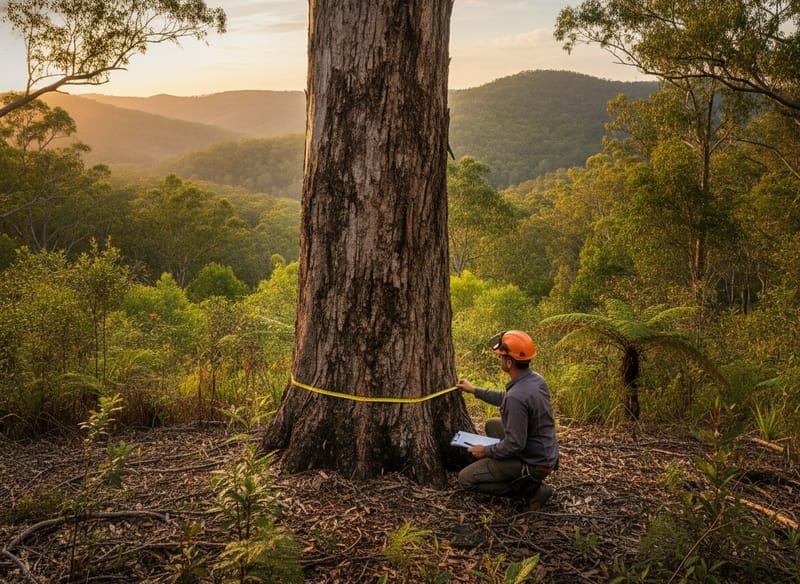
We inspect all trees and storm debris across your Jingili property, identifying urgent risks and salvageable timber.
We provide a comprehensive written quote outlining the exact clearing, dismantling, and disposal requirements.
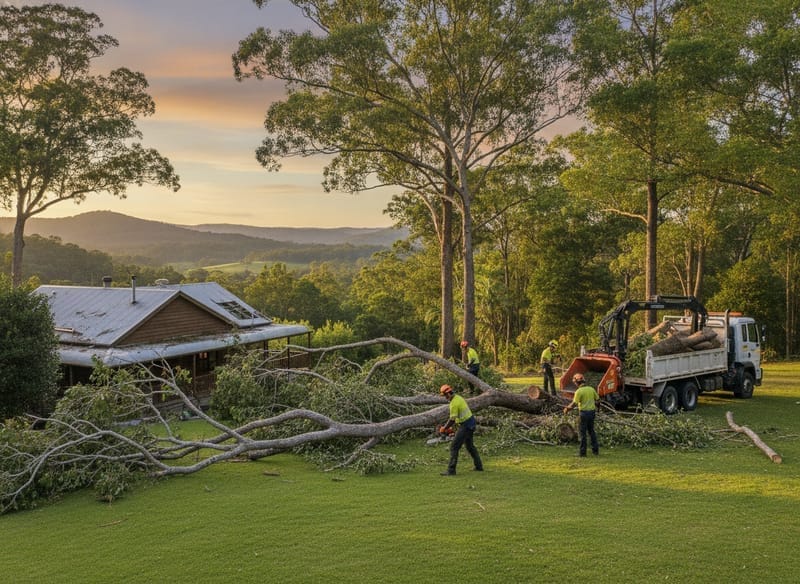
Our team cuts up fallen trunks, rigs down damaged limbs, and feeds all green waste through our wood chipper.
We rake up small twigs, sweep hard surfaces, and leave your property clear and safe.
When extreme weather hits the Top End, dealing with fallen and dangerous timber requires immediate, professional attention. If you are dealing with a fallen canopy, hung-up branches, or a completely uprooted tree after a severe weather event, you need our dedicated Storm Damage Tree Removal Jingili service to secure your property safely and efficiently. As a locally established arboriculture business, Darwin Arborist understands the devastating impact of our monsoon wet season. From the severe legacy of Cyclone Fina in November 2025 to sudden afternoon squalls, properties in Jingili and surrounding Darwin suburbs are highly vulnerable to canopy failures. Fast-growing shade trees often succumb to waterlogged soils and extreme wind gusts, putting homes, fences, and powerlines at serious risk. Our experienced climbers and ground crew are equipped to handle complex emergency make-safe operations. We prioritise immediate hazards to protect your family and property, providing prompt, reliable service when you need it most. We know the local environment, the local tree species, and exactly what it takes to clear storm debris safely without causing further damage to your residential or acreage property.
After a severe wet season storm, the immediate instinct for many homeowners is to grab a chainsaw and start clearing debris. However, storm-damaged trees are unpredictable and incredibly dangerous. Hung-up branches, commonly known as widow-makers, can dislodge with the slightest shift in wind or vibration, causing catastrophic injury to anyone standing below. Furthermore, windthrown trees are under immense, hidden mechanical stress. Fast-growing species like African Mahogany that have failed due to shallow root systems in Darwin's lateritic red soils present severe tension hazards. Cutting into tension and compression wood without formal AQF Level 3 training can cause the trunk to violently split, or the massive root plate to snap back upright into its hole, crushing anything in its path. Undercutting the job or hiring un-qualified laborers often leads to botched cleanups, worsened property damage, and voided insurance claims. Our team provides a professional, AS4373-compliant approach to every storm job. We assess the structural integrity of the remaining canopy, safely dismantle hazardous limbs using advanced rigging techniques, and process the fallen timber without putting your structural assets at risk. By choosing qualified arborists, you ensure the hazard is completely resolved.
We utilize specialized arboricultural techniques to safely manage and extract storm-destroyed vegetation across suburban Darwin, ensuring zero secondary damage to your property.
We categorize trees based on risk. Priority one is always immediate hazards threatening houses, powerlines, or access routes. We perform make-safe cuts to relieve weight, untangle broken limbs, and stabilize the site before commencing full extraction.
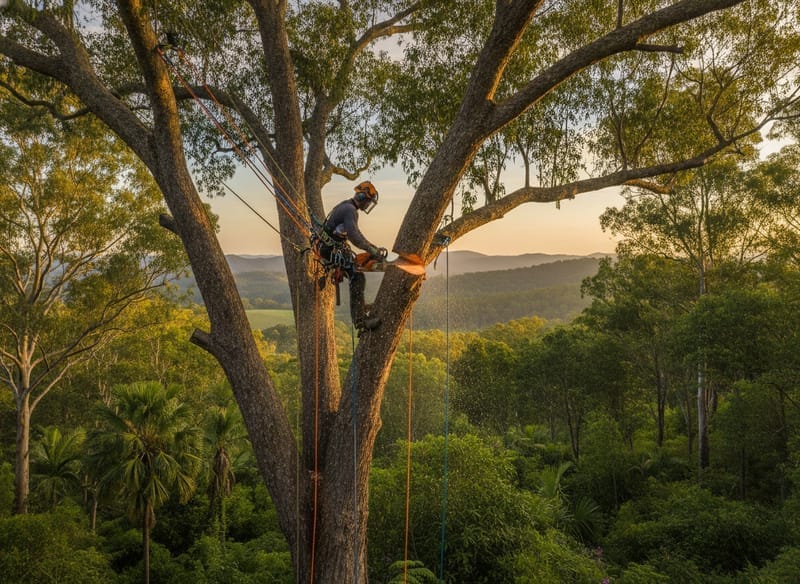
For large limbs suspended over roofs or sheds, our AQF Level 3 climbers use specialized rope access and friction devices. This allows us to lower heavy, damaged timber to the ground in controlled sections, bypassing the need for heavy machinery on saturated ground.
Uprooted trees sitting on Darwin's lateritic hardpan present severe tension hazards. We use targeted ground-saw cuts to safely release compression wood, severing the trunk while ensuring the massive root plate settles safely back into the cavity without snapping.
Before any cutting begins, we take comprehensive site photos and provide a detailed, itemised quote separating each tree and hazard. This rigorous documentation ensures your insurer receives exactly what they need to process your storm claim smoothly.
When a cyclone or severe squall damages your property, time is of the essence. When executing a Storm Damage Tree Removal Jingili operation, our team follows a strict, highly efficient operational procedure to restore safety to your yard as quickly as possible. Step 1: Emergency Call and Triage When you contact us, we assess the urgency of your situation. We prioritize calls where trees have compromised dwellings or blocked primary access, deploying our assessors rapidly to Jingili, Moil, Alawa, and neighbouring suburbs. Step 2: Site Assessment and Quotation Our senior arborists conduct a thorough on-site risk assessment. We map out the hazards, formulate a safe dismantling plan, and provide a clear, itemised quote designed for direct submission to your insurance company. Step 3: Hazard Dismantling and Removal Using top-handle saws, double-rope access techniques, and elevated work platforms where terrain permits, our climbers carefully dismantle the hazardous timber. We process the broken canopy from the top down, safely lowering heavy limbs away from your roofline and fences. Step 4: Cleanup and Processing Once the hazard is on the ground, our ground saws and high-capacity wood chippers make quick work of the debris. We process all branches into mulch and use tipper trucks to remove heavy logs, leaving your property safe and accessible.
Engaging a legitimate, professional arborist is critical, especially when dealing with severe property damage and insurance providers. Our business is fully insured with comprehensive public liability and WorkCover, giving you absolute peace of mind while our climbers operate heavy machinery and rigging equipment over your home.
All pruning, hazard reduction, and structural limb removal aligns strictly with AS4373 — Pruning of Amenity Trees. We never perform damaging lopping practices that encourage weak epicormic regrowth and create future storm hazards. Our team members hold their AQF Level 3 in Arboriculture and current tickets for chainsaw operations, working at heights, and elevated work platforms. Safety is our non-negotiable priority on every Jingili site.
Darwin's unique monsoon tropics environment dictates how trees fail and how they must be managed. Severe Tropical Cyclone Fina in November 2025 and Cyclone Marcus in 2018 proved that our urban canopy is highly susceptible to massive windthrow. Fast-growing shade species like African Mahogany often fail here due to Darwin's lateritic red soil and shallow hardpan. The roots simply cannot penetrate deep enough, and when combined with waterlogged wet-season conditions, the entire root plate gives way. When completing Storm Damage Tree Removal Jingili, we specifically look for these shallow root plate failures and tension-loaded trunks. Conversely, species like the Northern Milkwood and Banyan tend to show better resilience but still suffer major branch snap during Category 2 and 3 gusts. Fortunately, the City of Darwin regulatory regime is straightforward for homeowners in crisis. Council By-Laws 102 and 103 protect vegetation on public land and oblige residents to keep verges clear, but there are no private tree permits or protected registers binding standard residential blocks in Jingili. This means we can respond to secure your property without waiting for municipal red tape or tree clearing permits.
Once the immediate storm debris has been cleared from your property, it is crucial to monitor your remaining canopy. High cyclone winds can cause microscopic fractures in branch unions that may not completely fail until weeks after the weather event has passed. We highly recommend scheduling a follow-up structural inspection. Our arborists can assess your retained trees for structural cracks, leaning trunks, or slightly lifted root plates. Proactive formative pruning, deadwooding, and weight reduction before the next wet season arrives is the most effective way to prevent future storm damage and keep your Jingili home completely safe.
Storm damage cleanup pricing depends on the volume of fallen timber, the presence of hung-up branches, and equipment access.
We supply detailed, upfront written quotes designed to satisfy insurance assessors and property owners alike.
Providing post-storm tree clearing across Jingili and Darwin's coastal communities.
Contact our experienced team for fast, thorough storm cleanup and insurance-ready quotes.
Get a Storm Cleanup Quote