Controlled Tree Size
Keep large shade trees at a manageable height that fits your block and won't threaten structures.
Safe height reduction, selective canopy management, and professional alternatives to crude tree lopping.
Canopy reduction and height management across Jingili and Darwin.
If your trees have outgrown their space, our tree lopping and canopy reduction service in Jingili provides practical solutions to reduce height and bulk while preserving safety.
Fast-growing trees like Poinciana, Rain Tree, and Mango can quickly overwhelm Jingili house blocks. Traditional lopping leaves large cut surfaces that rapidly decay under Darwin's high heat and monsoon rainfall. We use correct arborist reduction methods to solve size issues safely.
Keep large shade trees at a manageable height that fits your block and won't threaten structures.
Avoid the hazardous, weakly anchored shoots that sprout after crude topping and blow off in storms.
Stop heavy branches rubbing on roof tiles, filling gutters with debris, or dropping fruit on vehicles.
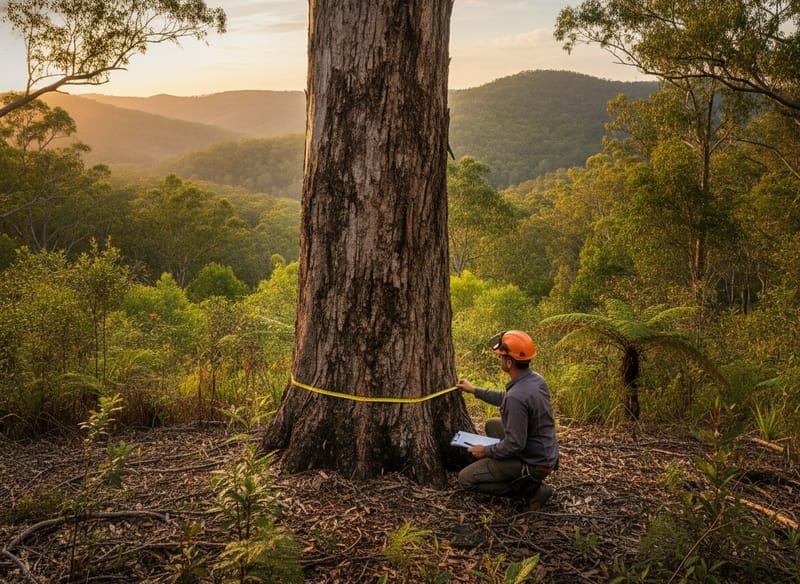
We evaluate the tree's height, structure, and lateral branch junctions to plan safe reduction cuts.
We advise on the most effective reduction method to control size while maintaining structural stability.
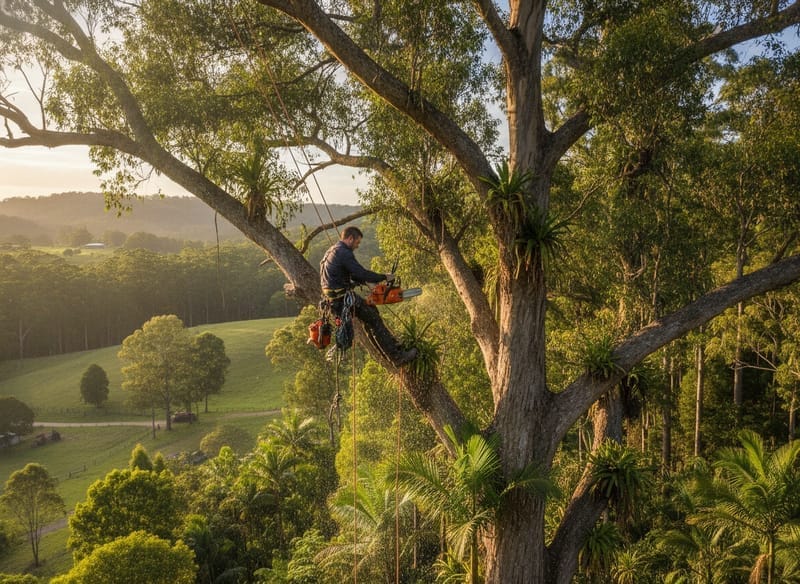
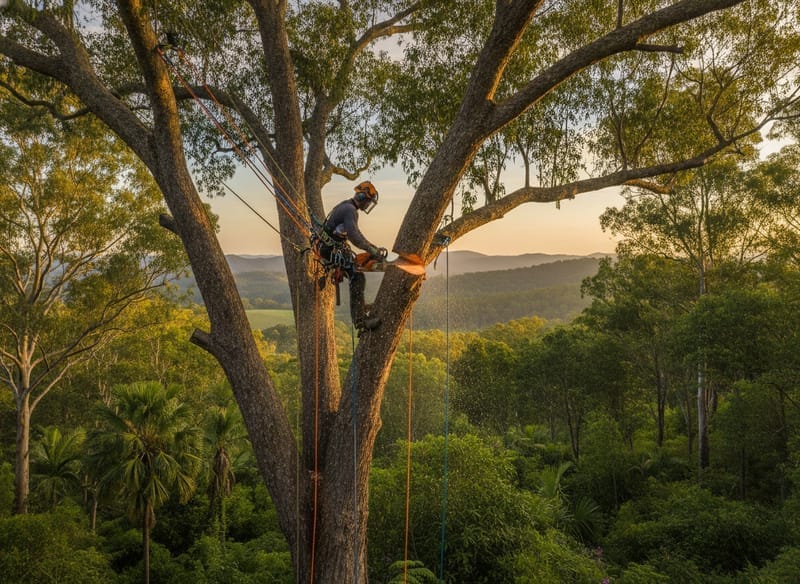
Our climbers lower heavy canopy sections safely using rigging lines to prevent lawn and fence damage.
All cut timber and foliage are put through the chipper and the work area is thoroughly raked.
Here in the Top End, rapid wet season growth means trees can quickly dominate a standard suburban block, shading out gardens, blocking breezes, and posing severe hazards during monsoon storms. When homeowners, builders, and property managers need professional Tree Lopping Jingili properties can depend on, they call our dedicated team at Darwin Arborist. We understand exactly what it takes to manage large vegetation in this intense tropical climate. Following the devastation of Severe Tropical Cyclone Fina in November 2025—which brought catastrophic winds and saw over 5,000 trees require emergency work across Darwin—the importance of proactive canopy management has never been clearer. Many of the catastrophic failures during that Category 3 event were caused by top-heavy trees rooted in shallow lateritic soils. Whether you need an encroaching canopy pulled back from your roofline, clearance over a driveway, or a hazardous tree significantly reduced before the next wet season, our experienced local climbers deliver safe, compliant, and highly effective pruning solutions that protect your property without destroying the health of your trees.
When people ask for tree lopping, they generally just want a problematic tree made smaller. However, traditional "lopping"—indiscriminately hacking branches back to raw stubs—is highly destructive and explicitly discouraged under Australian Standard AS4373. In Darwin's monsoonal climate, raw lopping cuts expose the tree to intense heat, leading to rapid decay, sunburn, and pest ingress. Even worse, lopping forces the tree to push out panic growth, known as epicormic shoots. These new branches grow incredibly fast but are poorly attached to the trunk. When the next cyclone or severe wet season storm hits, these weak attachments are the first to snap. We saw this extensively after Cyclone Marcus and Cyclone Fina, particularly with poorly pruned African Mahogany trees that tore apart under wind loading. At Darwin Arborist, we solve your size and clearance issues using AS4373-compliant techniques. Instead of leaving ugly, dangerous stubs, we use proper branch collar cuts and target pruning. We reduce the weight and wind resistance of the canopy, giving you the clearance and safety you need while preserving the structural integrity of the tree. This means less maintenance in the long run, lower risk of failure, and a much better-looking garden.
While our clients often ask us to simply "lop" a tree, we utilize specific, scientifically backed arboricultural techniques to achieve that size reduction safely. We tailor our approach to your specific property goals and the species of the tree.
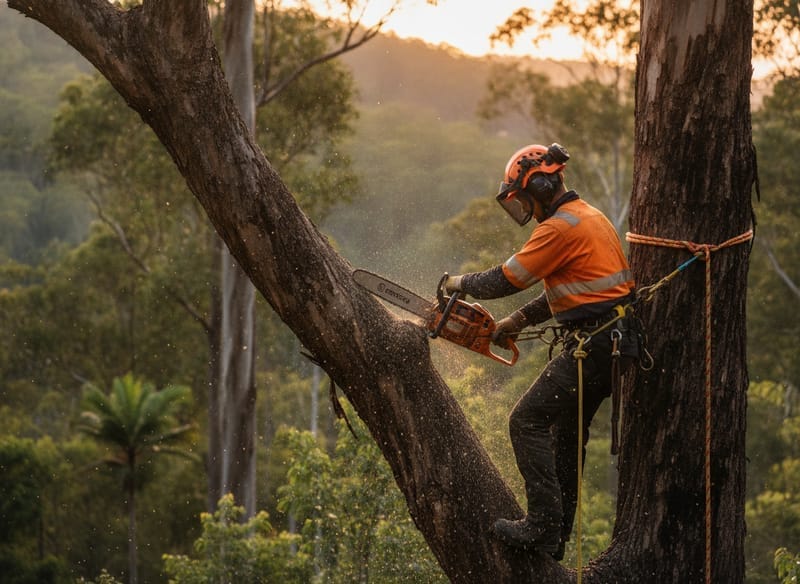
The AS4373-compliant alternative to lopping. We reduce the overall height and spread of the tree by cutting back to appropriate lateral branches. This makes the tree significantly smaller and reduces wind sail area while maintaining a natural shape and strong branch attachments.
When a tree is encroaching on the ground below, we selectively remove the lower branches. This is the perfect solution for clearing pedestrian pathways, driveways, or maintaining line-of-sight on corner blocks in Jingili without reducing the upper canopy.
We remove specific secondary branches throughout the canopy to increase light penetration and air flow. In Darwin's tropical storm season, this crucial technique allows cyclonic winds to pass right through the tree, massively reducing the pressure on the shallow root plate.
Sometimes "lopping" is required for emergency hazard mitigation. If a tree has sustained heavy damage from a monsoon squall, we can rapidly reduce the remaining crown weight to stabilize the structure until a full removal or restoration plan is implemented.
At Darwin Arborist, we ensure every job is handled with military precision, from the first call to the final sweep.
Safety and compliance are non-negotiable in the arboriculture industry, especially when working at heights over residential homes. Our team operates strictly in accordance with AS4373 (Pruning of Amenity Trees), ensuring every cut promotes tree health and stability.
We are fully public liability insured and strictly adhere to WorkCover requirements for all our staff. Our climbers hold AQF Level 3 in Arboriculture, along with current Working at Heights, EWP, and First Aid tickets. From utilizing double-rope climbing techniques to deploying heavy loader cranes for massive timber extraction, our operations are built on a foundation of rigorous risk management and uncompromised safety standards.
When providing Tree Lopping Jingili property owners often ask us about council regulations and permits. The good news is that the City of Darwin has very little regulation regarding trees on private residential land. There is no private protected tree register, meaning you generally do not need a council permit to prune or reduce trees in a standard Jingili backyard. In fact, under Council By-law 103, you are legally obliged to trim back vegetation that overhangs public footpaths or roads.
Understanding local species is critical. While resilient natives like Banyan, Sea Almond, and Darwin Woollybutt respond well to targeted structural pruning, legacy plantings of African Mahogany are notoriously problematic. Planted heavily after Cyclone Tracy, these mahoganies have proven highly susceptible to windthrow due to Darwin's lateritic soils restricting deep root growth. Reducing the canopy weight of these specific species before the wet season is one of the most common and vital jobs we undertake in Jingili and surrounding suburbs.
After we have successfully reduced your tree, correct aftercare is vital in our harsh tropical climate. Even with proper AS4373 pruning, trees will experience some stress. We highly recommend deep, infrequent watering rather than shallow surface watering. As the City of Darwin post-cyclone reviews highlighted, surface watering leads to balled root systems which dramatically increase the risk of the tree blowing over in monsoon winds. Keep an eye on the canopy during the dry season. If you notice rapid, clustered shoot growth (epicormic growth) or dieback, contact us. We recommend scheduling an annual canopy inspection every October, ensuring your trees are structurally sound and wind-resistant before the heavy November storm season arrives.
Pricing for canopy reduction and lopping alternatives in Jingili depends on tree size, access, and the volume of timber being removed.
We provide honest, fixed-price quotes outlining the exact cuts and cleanup included in the job.
Managing overgrown tree canopies across Jingili and nearby suburbs.
Talk to our qualified team about safe, professional canopy reduction for your property.
Get a Free Quote