Maintained Canopy Safety
Proper reduction cuts prevent internal rot, ensuring your trees remain sturdy during high wet season winds.
Safe canopy reduction and expert tree management that resolves clearance problems without ruining tree health.
Canopy reduction services across Rapid Creek, Nightcliff, Coconut Grove, and Millner.
If you are searching for tree lopping Rapid Creek, our arborists provide the right height reduction and canopy cutback solutions to keep your trees safe and manageable.
Traditional lopping or topping cuts create rapid, weakly attached water shoots. In Rapid Creek's humid monsoonal climate, these weakly attached shoots grow at rapid speed and easily snap off in cyclone gusts. We apply proper reductions that maintain branch strength.
Proper reduction cuts prevent internal rot, ensuring your trees remain sturdy during high wet season winds.
Gain safe vertical clearance over your roofline, gutters, and solar panels without killing the tree.
Avoid frequent repeated lopping cycles by establishing a sound, manageable branch structure that lasts.
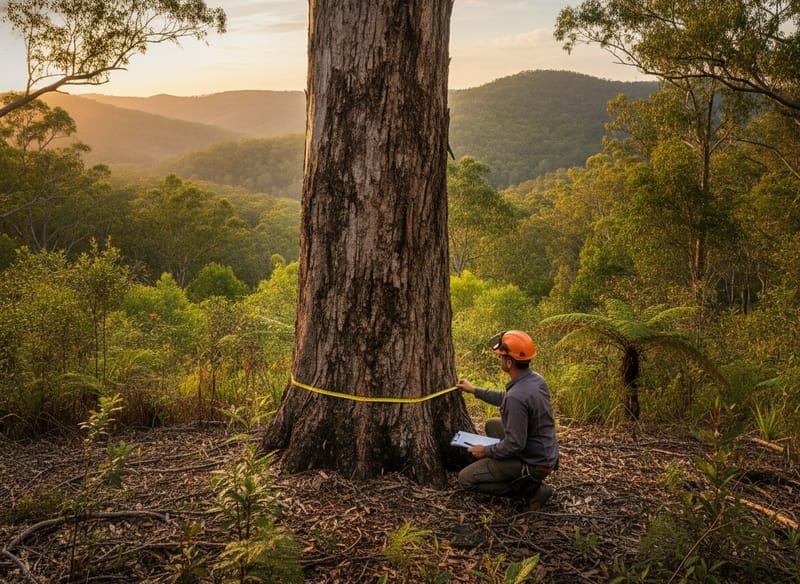
We evaluate what height or spread needs reducing and identify natural branch junctions to cut back to.
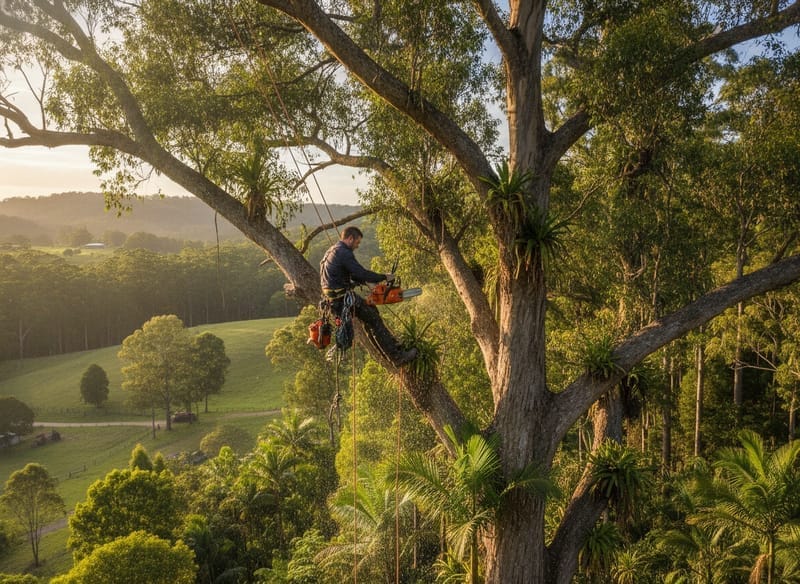
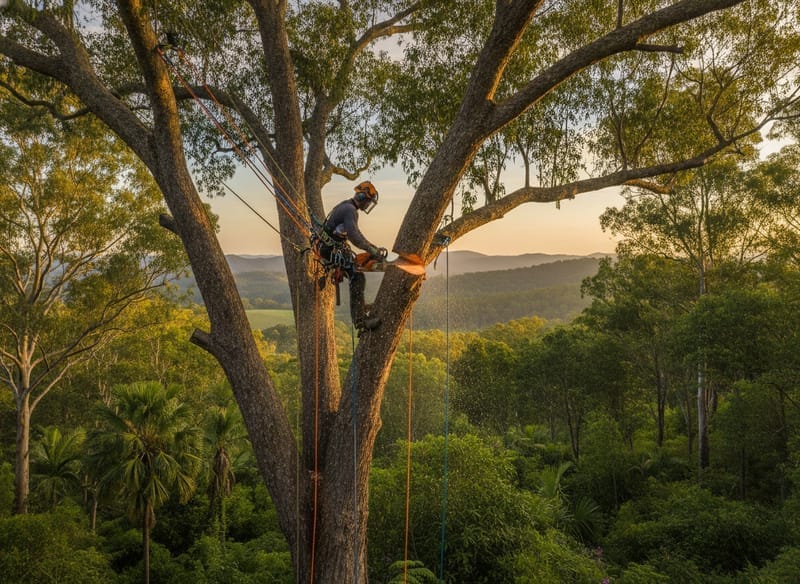
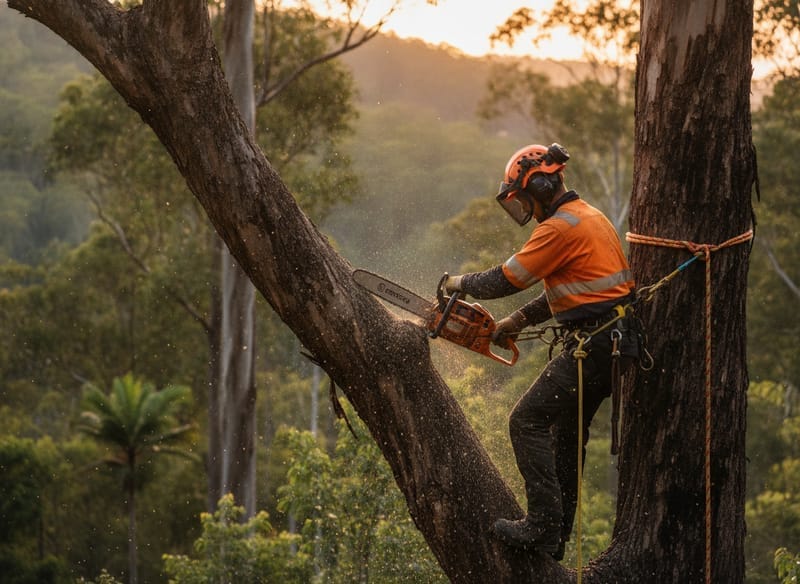
Our climber removes heavy terminal weight using controlled reduction cuts rather than arbitrary flush topping.
We balance the remaining foliage to preserve natural aesthetic form and stable wind resistance.
All cut branches are processed through our chipper, and lawns and hard surfaces are raked clean.
Living in Rapid Creek means enjoying mature, leafy blocks, but managing large canopies during the Darwin wet season requires professional care. When properties become overshadowed or branches encroach on rooflines, many residents search for Tree Lopping Rapid Creek to get their yard under control and prepare for monsoonal weather. At Darwin Arborist, we understand that while homeowners commonly use the term "lopping" to describe making a tree smaller, achieving a safe, long-lasting result requires proper arboricultural techniques. We service Rapid Creek and surrounding Darwin suburbs, managing everything from overgrown residential mango trees dropping debris on driveways to massive Sea Almonds that need canopy reduction before the high winds arrive. Our team handles the steep learning curve of Darwin's climate, ensuring your trees are reduced in size without compromising their structural integrity. We deliver solutions that protect your property while keeping your established trees healthy and resilient.
It is common for homeowners to want a massive tree chopped in half, but true "lopping"—making heading-back cuts that leave large, blunt stubs—is heavily discouraged under Australian Standard AS4373. Unqualified operators who hack trees back leave them structurally compromised. Those large stubs promote weak, rapid epicormic regrowth, which is poorly attached to the trunk and highly susceptible to snapping. In a monsoon climate like ours, this is a recipe for disaster. During Cyclone Marcus and the recent Cyclone Fina, trees with compromised structures, shallow root plates, or poorly managed canopies were often the first to fail. When you hire our team, we do not indiscriminately chop limbs. If you want a tree made smaller, we use AS4373-compliant crown reduction. This targets specific branches, cutting back to a healthy lateral limb or branch collar. The tree heals correctly, the canopy is reduced, and the risk of weak regrowth turning into dangerous storm debris is eliminated. Whether it is an overgrown Banyan or a sprawling Rain Tree on your property, we provide a solution that achieves the size reduction you want while keeping the tree genuinely safe.
While "lopping" is the everyday term for cutting back a tree, our qualified arborists use specific, standard-compliant pruning methods to achieve your goals safely.
We carefully reduce the overall height and spread of the canopy by cutting branches back to a suitable growth point. This makes the tree smaller while preserving its natural shape and structural integrity, which is crucial for cyclone resilience.
Instead of hacking the top of the tree, we remove the lower branches to increase clearance over driveways, footpaths, or roofs. This is ideal for properties dealing with sagging wet-season growth obstructing access.
We selectively remove secondary branches throughout the canopy to allow wind and light to pass through. This reduces wind resistance during monsoonal squalls without altering the tree's overall size.
We target specific problematic branches—such as those rubbing against your gutters or extending over your boundary—removing them cleanly at the branch collar to prevent decay.
When a tree has been partially failed by high winds, we perform urgent reduction cuts to make the remaining structure safe, often a necessary step before a final removal or recovery plan is put in place.
Getting your trees safely reduced shouldn't be a hassle. We have refined our process to be as straightforward and professional as possible when delivering Tree Lopping Rapid Creek services for our local clients. 1. On-Site Assessment We visit your property to inspect the tree in question. We discuss exactly what you mean by "lopping"—whether you need more sunlight, roof clearance, or a shorter canopy. We check the species, evaluate the local lateritic soil conditions, and map out access routes for our equipment. 2. Fixed, Detailed Quoting We provide a clear, itemised quote outlining the exact AS4373-compliant methods we will use to reduce the tree, along with the timeline and cost. There are no hidden surprises. 3. Canopy Reduction and Pruning Our qualified climbers and EWP operators arrive on schedule. Using top-handle climbing saws and precise rope rigging, we safely dismantle the required sections of the canopy. We never let heavy timber free-fall onto your lawns or garden beds. 4. Processing and Site Cleanup As limbs are lowered, our ground crew processes them through our high-capacity wood chippers. We rake and blow down the site, ensuring your property is left immaculate, with all green waste carted away in our tipper trucks.
All our canopy reduction and tree modification work is performed in strict accordance with AS4373 (Pruning of Amenity Trees). Our climbers hold AQF Level 3 in Arboriculture, meaning they are formally trained to modify canopies using proper branch collar cuts rather than damaging lopping techniques.
For complex development sites or hazard assessments, our consulting arborists hold AQF Level 5 qualifications. Every job we undertake is fully insured for public liability and covered by WorkCover, giving you complete peace of mind when our trucks and chippers roll onto your property. We also carry out all high-risk work with fully ticketed Elevating Work Platform (EWP) operators and rope-access specialists.
Understanding the local environment is crucial for any tree work here. When it comes to Tree Lopping Rapid Creek regulations, the rules are surprisingly straightforward. The City of Darwin does not require permits for pruning or removing trees on standard private residential blocks. The by-laws mostly protect vegetation on council land or compel owners to clear overhanging branches from public footpaths. However, the environmental reality of Darwin dictates how we must work. The city sits on lateritic red soil with a hardpan that severely restricts rooting depth. This shallow root system, combined with monsoonal rain, makes heavy, unmanaged canopies incredibly dangerous. The legacy of Cyclone Marcus and Cyclone Fina showed exactly what happens when top-heavy African Mahoganies and saturated ground meet. When we assess a tree—whether it is a hardy Northern Milkwood or a sprawling Banyan—we prune to reduce wind-sail area. Proper canopy reduction ensures your trees can withstand Top End weather without needing drastic, structurally damaging topping cuts.
Once our team has completed a professional canopy reduction, your tree will need a little time to adjust. During the dry season, ensure you provide deep, infrequent watering to encourage strong, downward root growth through Darwin's lateritic soils, rather than the shallow balled roots that often cause wet-season windthrow. Keep an eye on the canopy as the wet season approaches. Because we use proper AS4373 cuts, you will not see the explosion of weak, spindly epicormic growth associated with bad tree lopping. However, tropical growth rates are fast. We recommend having our arborists return every 12 to 24 months to inspect the canopy and perform any minor selective pruning required to keep the tree perfectly sized and storm-ready.
Canopy reduction and lopping quotes in Rapid Creek reflect the height of the tree and complexity of the cutback.
We provide honest, fixed-price written quotes detailing the work before any cutting starts.
We provide canopy reduction across Rapid Creek and surrounding Darwin suburbs:
Contact our qualified team for practical canopy reduction that protects your home and trees.
Get a Reduction Quote