Restored Safety
Eliminate the ongoing danger of partially detached limbs and destabilised root plates around your home.
Specialist post-storm and cyclone tree clean-up, canopy recovery, and debris removal across Woolner.
Restoring storm-affected properties across Woolner and inner Darwin.
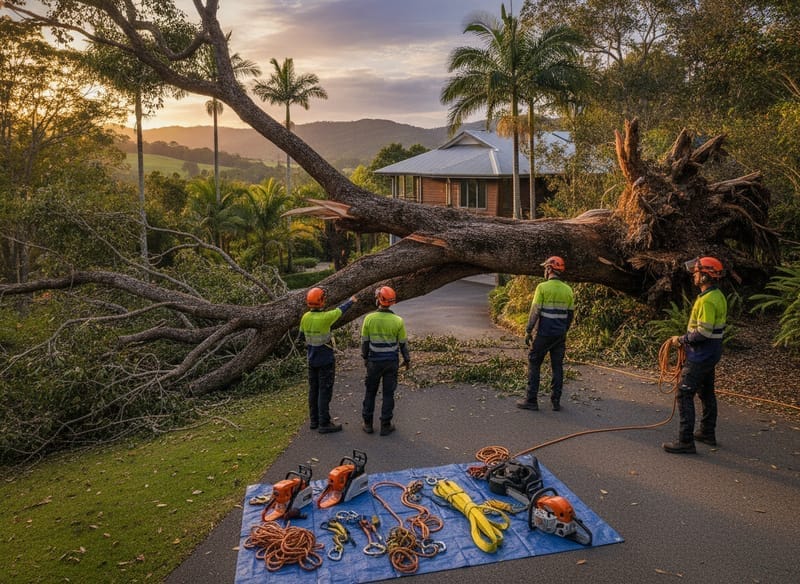
Tropical storms and monsoons regularly inflict heavy damage on Darwin's urban forest. Our storm damage tree removal Woolner service clears fallen trunks, shattered canopies, and dangerous hung-up timber across residential and commercial properties.
During events like Category 3 Cyclone Fina, saturated ground conditions compounded by Woolner's shallow lateritic hardpan caused widespread root-plate leverage. Damaged trees that were only partially made safe remain major hazards during the next wet season.
Eliminate the ongoing danger of partially detached limbs and destabilised root plates around your home.
Receive detailed, professional paperwork and scope documentation tailored for insurance assessment.
Transform a chaotic, debris-covered yard or commercial lot back into a clean, safe, and functional space.
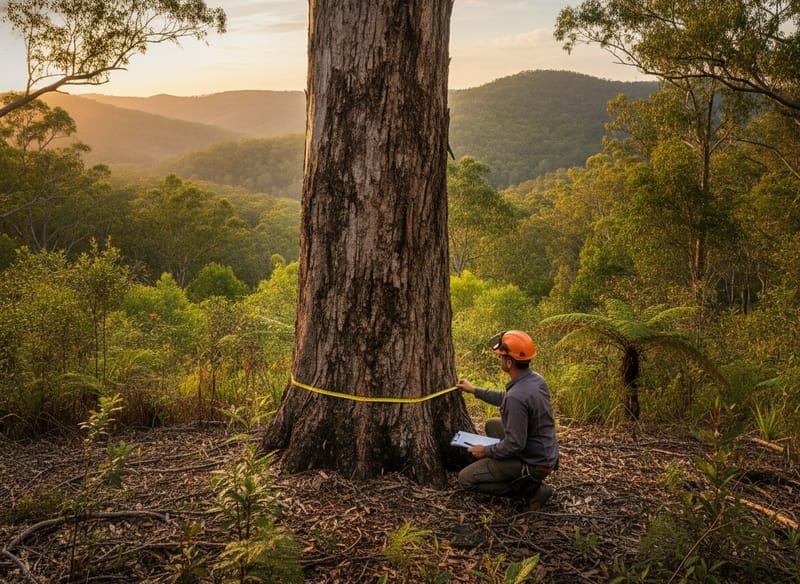
We inspect the property to identify all fallen, cracked, hung-up, and root-sprung trees.
We secure damaged timber and process trees starting with the most hazardous structures first.
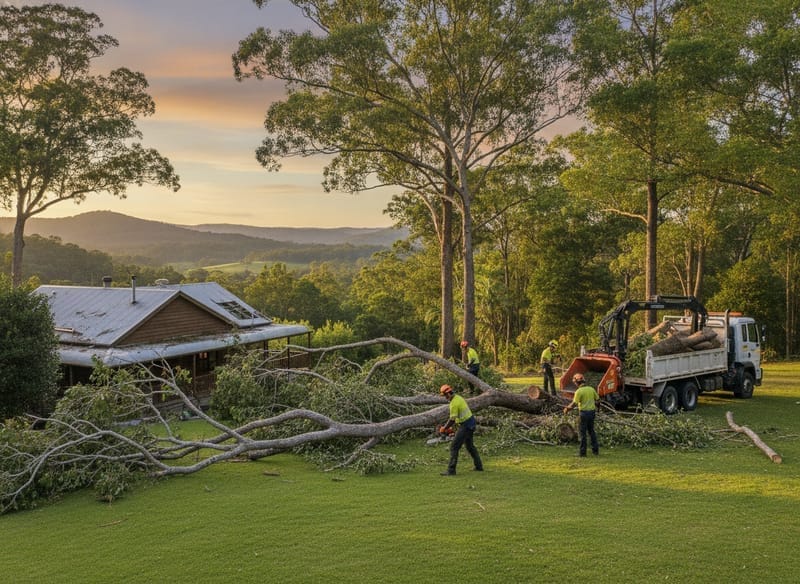
Green waste and branches are processed through commercial chippers for off-site removal or mulch reuse.
We clear remaining twigs, rake grounds, and ensure all walkways and driveways are safe and clean.
When monsoonal winds and saturated ground converge, established canopies are put under immense pressure. For properties navigating the aftermath of extreme weather, prompt and professional Storm Damage Tree Removal Woolner is the first step toward securing your home. We have seen firsthand the devastation left behind by Cyclone Fina and the localized squalls that tear through our wet season. Darwin’s lateritic soil features a shallow hardpan that severely restricts rooting depth. Combined with torrential rains, large shade trees simply lose their anchor and fail at the base. Our team specializes in assessing, making safe, and fully extracting failed or compromised timber. Whether you are dealing with an upended root plate in your front yard, snapped branches suspended above your roof, or heavy African Mahoganies resting on your fence line, we provide the urgent, highly technical response required to restore safety to your property.
Tackling windthrown timber yourself is incredibly dangerous. When a tree falls or snaps, the timber stores massive amounts of kinetic energy. Trunks resting on structures or the ground are loaded with unpredictable tension and compression forces. A single incorrect chainsaw cut can cause a "spring pole" reaction, where the log violently snaps back, or the severed root plate crashes back into its crater, risking severe and fatal injuries.
Furthermore, unqualified operators often resort to lopping or making crude cuts on standing-but-damaged trees. This directly violates AS4373 standards, leaving large, decaying stubs that promote weak, dangerous epicormic regrowth. In a cyclonic region, a poorly pruned tree is a guaranteed future hazard.
Insurance claims also complicate DIY or under-the-table work. Insurers typically require detailed, line-itemized quotes and condition reports from an AQF Level 3 or Level 5 qualified arborist. Attempting the work yourself or hiring someone without public liability insurance can leave you financially exposed if secondary damage occurs during the cleanup. We ensure every compromised tree is safely dismantled, meticulously documented, and processed without putting your home at further risk.
We utilize specialized equipment and proven arboricultural techniques to safely dismantle windthrown, heavily tensioned, and hazardous trees across suburban Woolner.
We first walk the property to tag hazards by priority. Immediate threats over structures, driveways, or power lines are addressed instantly, isolating the danger zone before any major cutting begins.
Fallen trees on Darwin's shallow hardpan often leave massive root plates exposed. We carefully calculate tension and compression points, winching trunks to prevent violent snap-back when the severed root ball falls back into its cavity.
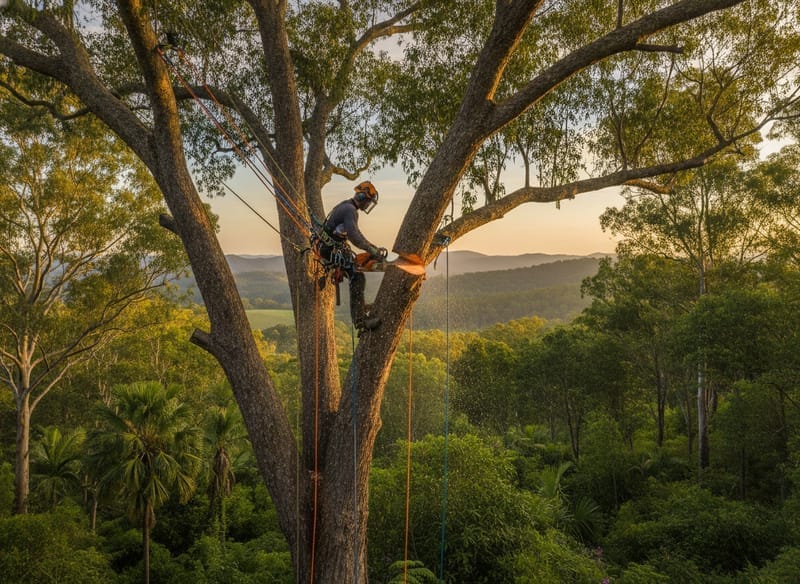
High-wind events frequently leave snapped limbs suspended in the remaining canopy. Our AQF Level 3 climbers use single-rope access and advanced rigging techniques to safely lower these "widow makers" to the ground without damaging the property below.
For massive uprooted exotics resting on residential roofs or carports, we deploy crane-assisted removal. This lifts the heavy timber straight up and away, eliminating further weight, friction, or secondary collapse on your structure.
We process all limbs through commercial-grade wood chippers on-site and utilize HIAB trucks for large log extraction. We leave the site completely clear, safe, and ready for post-storm repair.
When a severe storm impacts your property, a structured, methodical response is critical for both safety and insurance compliance. Step one is an emergency site assessment. We inspect the damage, identify immediate hazards, and provide a comprehensive, itemized quote that you can submit directly to your insurer. We always document the pre-work condition with clear photography to support your claim. Step two involves hazard isolation and make-safe procedures. Before tackling the main trunk, we clear access paths, secure the perimeter, and remove suspended canopy debris. If power lines are involved, we coordinate strict clearance protocols to ensure safe working limits. Step three is the technical dismantling. Depending on access in Woolner, we utilize EWPs or specialized rope-access climbing to piece down the damaged structure. We use advanced lowering friction devices and rigging to glide heavy timber away from fences and rooflines. Step four focuses on the root zone. Uprooted trees are separated from their root balls using controlled relief cuts, allowing the massive, soil-heavy plates to settle back into the lateritic soil crater safely. Finally, step five is complete site cleanup. We chip the brush, remove the heavy logs via tipper trucks, and tidy the grounds, leaving your yard safe and accessible.
Storm damage response requires rigorous, uncompromising safety protocols. Our business is fully insured with comprehensive public liability and WorkCover, protecting your property and our staff during high-risk and unpredictable removals. Every climber on our team holds an AQF Level 3 in Arboriculture, alongside required High Risk Work licenses for EWPs and chainsaw operations. For complex insurance claims, our AQF Level 5 consulting arborist can provide the necessary structural assessments and formal reports. All pruning and make-safe work strictly adheres to AS4373 (Pruning of Amenity Trees), ensuring any retained timber is correctly managed to minimize future decay and failure risk.
Woolner is heavily shaped by Darwin's intense climate and specific soil profile. The lateritic red soil and underlying hardpan mean deep root systems simply cannot form. During our monsoonal wet season, when saturated ground combines with cyclonic gusts, these shallow root plates fail dramatically. The legacy of Cyclone Marcus and the devastating impact of Cyclone Fina in late 2025 highlighted a clear local issue: fast-growing, heavy exotics like the African Mahogany are incredibly prone to windthrow. We handle countless failures of these species, alongside other non-resilient shade trees that suffer from waterlogged, balled roots. Fortunately, City of Darwin regulations are straightforward for suburban storm recovery. There are no private tree permits or significant tree registers blocking emergency work on a standard Woolner block. However, Council By-law 103 mandates that verges, footpaths, and roads remain clear of obstructing vegetation. Our team works efficiently to ensure all fallen debris is processed and removed, keeping your property compliant and safe.
Once the immediate Storm Damage Tree Removal Woolner work is complete, site recovery begins. If an uprooted tree leaves a large crater, we highly recommend backfilling the depression with quality soil to prevent wet-season water pooling, which can drown adjacent plant roots and breed mosquitoes. Monitor any standing trees that survived the storm. Look for signs of stress, such as sudden epicormic shoots (fuzzy, weak regrowth along the trunk) or newly formed cracks in branch unions. When replanting, avoid brittle, fast-growing exotics; instead, consult us on cyclonic-resilient local species like Northern Milkwood, Sea Almond, or Banyan. Call us back before the next wet season for a preventative canopy assessment.
Storm damage tree work pricing is based on the scale of tree damage, site access, and machinery requirements.
We supply clear, itemised written quotes that detail all labour, equipment, and tipping fees.
We provide storm damage tree removal across Woolner and neighbouring Darwin suburbs.
Contact our experienced Darwin team for full storm clean-up and hazardous tree removal.
Get a Free Quote